

The Cree moccasin represents Cree Peoples of northern Ontario, part of one of the largest First Nations language groups in North America. Cree Nations have long occupied vast northern territories, developing knowledge systems finely tuned to boreal forests, waterways, and seasonal cycles.
Cree moccasins were highly functional garments designed for endurance and mobility across northern landscapes. Made from soft, insulating hide and shaped for use with snowshoes, they employed construction techniques suited to long-distance travel, including pucker-toe designs that gathered the hide at the instep and toe for a close, low-friction fit. Moccasins were traditionally sewn inside out with sinew, protecting stitches from abrasion, and often reinforced with welt inserts or multiple layers of durable hide at the sole to withstand extended travel over snow, rock, and tundra. One-piece “true moccasin” designs and gusseted seams further reduced points of wear and helped keep out moisture and debris, making Cree moccasins essential tools for hunting, trade, and seasonal movement.


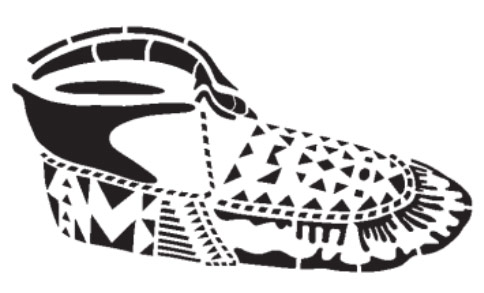
By the 19th century, Cree Nations were deeply involved in fur trade economies while continuing to practice First Nations governance, kinship systems, and land stewardship. Moccasins from this period reflect this balance—integrating trade materials while preserving First Nations design logic and use.
Within the Moccasin Identifier, the Cree moccasin ensures that northern First Nations presence is not marginalized or overlooked. It reinforces that Ontario’s Treaty landscape extends far beyond urban centres and that northern Nations have always been central to shaping relationships between land, people, and responsibility.
This moccasin stands as a reminder that First Nations knowledge systems are place-specific, land-based, and enduring.